Thrill
Lyanne Quay
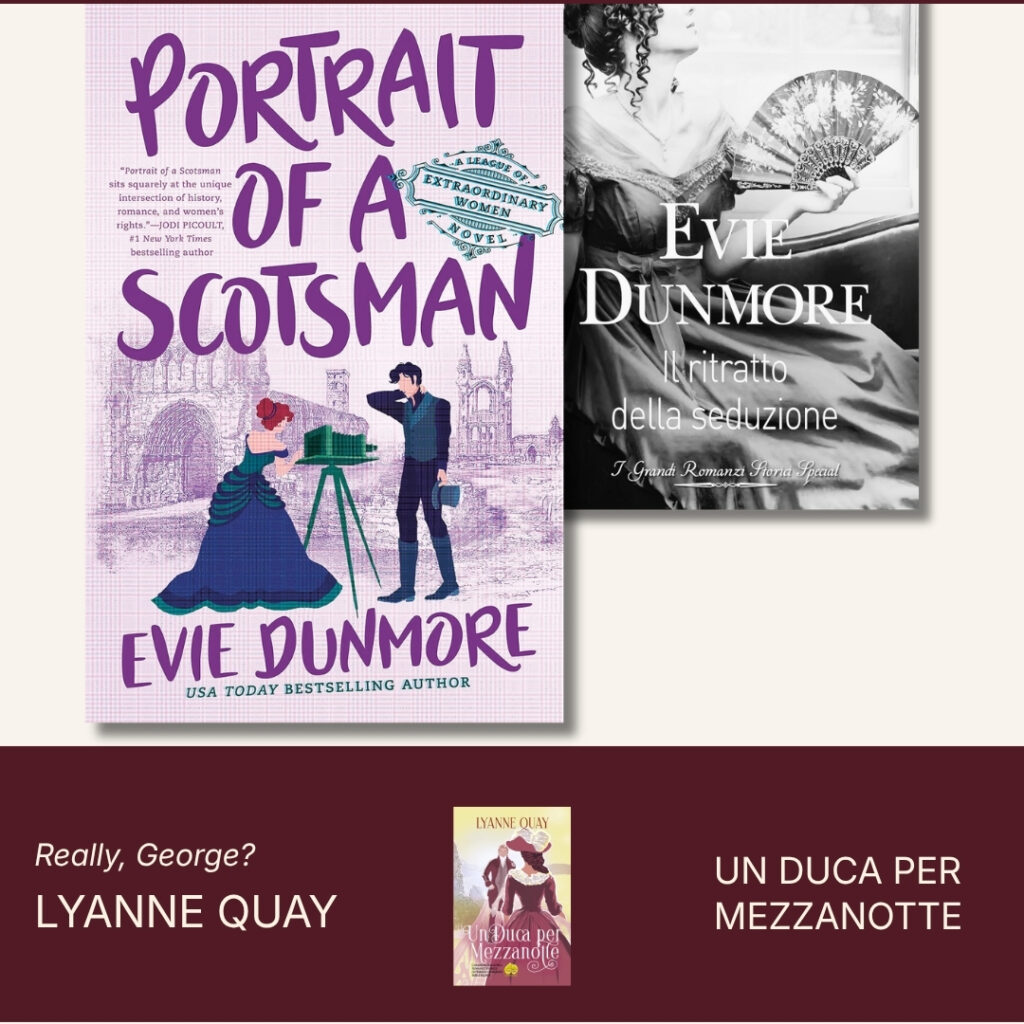
Male know-how at the bottom of the well: Dunmore’s Portrait of a Scotsman is one long seduction. So I’m fresh off a slowly savored read of Portrait of a Scotsman by Evie Dunmore, and there’s a lot to say.

First, the substance, and it’s real news: the sex is readable, tasty, interesting. It’s not the usual landing point where the story stops. It’s a source of dramatic turns in itself, because we have a tough guy risen out of the mud and a high-born porcelain lady he’s scared he’ll break with sex… And when the setup clicks, I think, oh God, let’s hope he doesn’t shut down and give her up because he feels unworthy. No, I’ll tell you right now: that doesn’t happen at all. The alchemy of romance leads Dunmore to trust nature and simplicity to resolve the plot. But let’s take it step by step.
A really gorgeous historical romance
The book is gorgeous. As a romance it’s absolutely gorgeous, but it’s not only a romance. It’s something more. It’s almost a pamphlet with brief nods to the infinite, meaning inequality and women’s subjection. Oh God, I ran ahead. Let’s take a step back.
Here we have a romance authors should study, to understand the subtle psychology of how feelings evolve. Let’s start with eroticism and social class.
My own prejudice: I thought eroticism was somehow tied to the decadence of the upper classes, as if working-class people, too oppressed by practical urgencies, all did it on the Mussolini motto of getting to the point with no time wasted. But no. After this book, I investigated with my husband, and he generously opened up a world for me. See, he’s from a very low class and knows a thing or two. He told me about a worker friend of his in heavy prefab construction: coming home from work, he’d find his wife waiting naked, with the “anteater” VHS already cued up. Animal porn, with an anteater, yes… My husband also told me his blacksmith ate Ferrero Rocher chocolates straight out of his wife’s ass.
A Victorian romance with a blue-collar billionaire
Here’s what we’ve got! The tough guy from the mud, turned soldier of fortune, full of animal spirits. I picture him as a Charles Bronson, but Dunmore describes him with pale, almost translucent skin, hugely muscled, silvery scars across his chest, a marble mass, eyebrows and hair black and soft as mink… Well, this pale Bronson knows his way around sex. He has the raw know-how of someone who for a long time had sex as the only outlet in a harsh, sunless life. He stands for the fundamental masculine. Male know-how at the bottom of the well. The infallible instinct that leads sperm to reach the goal.
And the trick that lifts this book to the heights of romance is that he, the male, sticks to the substance of a human being’s basic needs to the very end, without a wobble. That’s his priority in reading the world, and in reading her: this young woman, precious, delicate, intoxicating and evanescent as a “selkie.” The seal woman of Scottish mythology, the woman who sometimes comes ashore and sheds her sealskin. She’s beautiful, so the fisherman steals her skin to stop her going back to the ocean and keep her with him always. So the seal woman is shut up in a reality that isn’t hers, the fisherman’s house, until one day she inevitably finds her skin again and goes back to the ocean
A historical romance with erotic tension and great sex scenes
Selkie stories all end like that, Lucien says in the novel, and the whole time he studies his seal woman to figure out how to keep her from going back to the ocean. He teaches her the ABCs of human needs, from survival to instinct. So Lucien’s schooling becomes the map of a road to female emancipation.
Lucien stays a solid, steady, somehow enigmatic fixed point through the whole novel. That lets Hattie flutter freely around him, discovering herself, and discovering with anguish how repressed she’s been by society and family. The landing point: a blowjob that isn’t degrading at all, for once, because love is there and oozes from every page. Wonderful novel.
A period romance with real historical, social and psychological insight
As I said at the start, though, this super romance isn’t just a romance. It’s almost a pamphlet. Lucien remarks, at the peak of a beautiful conversation with Hattie, that “relative” poverty can’t be eliminated but absolute poverty can be fixed. And, breaking the fourth wall, he says something like: “We’ll build nurseries and hospitals…” The same goes for the woman question, where she muses:
«I realized that, seen from outside, I’m a refined adult, but inside I’m still a schoolgirl full of the old insecurity, and I understood this is fertile ground for my quirks. It’s exactly what makes me say and do things out of place, what pushes me too often to lean on other people’s opinions before I even understand what mine are, what makes me feel offended for no reason because I mix the subject under discussion with old wounds still bleeding. I know other women who live this kind of split: they run a home and a family successfully, but can’t make even a simple decision without consulting their husbands, or they dig in to control certain insignificant details just to feel like they’re controlling something. What chance will they ever have of changing? We pass seamlessly from a father to a husband, with no chance of getting to know ourselves, without interference. We stay infantile in our dependence, in our small world and in our perpetual devotion to others, and these others do nothing but tell us what we are. But I’m still young. It’s not too late for me… (Quotes are taken from the Italian edition of the novel and, in this case, translated into English by Claude, Anthropic’s LLM.)»
This extraordinary romance has a teaching streak, and a bit of a stretch in the finale to get its moral across. It’s a preachy ending where Lucien lets his selkie go back to the ocean so she can choose whether to come back to him. And she will. Wonderful story.
La sapienza maschile in fondo al pozzo e questo ritratto della Dunmore è tutto una seduzione. Dunque sono reduce dalla lettura centellinata de Il ritratto della seduzione di Evie Dunmore, e ci sono tante cose da dire.
Intanto andiamo alla sostanza, una vera notizia: il sesso si legge, si gusta, è interessante. Non è il solito approdo dove la narrazione si ferma, ma è esso stesso terreno di svolte drammatiche perché abbiamo un duro emerso dal fango e un’altolocata lei di porcellana che lui col sesso ha paura di rompere… E quando si configura la vicenda mi dico, oddio! Speriamo che lui non si chiuda in se stesso e non rinunci a lei per il complesso di esserne indegno. No, ve lo dico subito: questo non accade affatto, le alchimie del romance conducono la Dunmore ad affidare alla natura e alla semplicità la soluzione della vicenda. Ma andiamo per gradi.
Un historical romance veramente bellissimo
Il libro è bellissimo, come romance è assolutamente bellissimo, ma non è solo un romance; è qualcosa di più. È quasi un pamphlet con brevi cenni sull’infinito, ovvero sul tema delle disuguaglianze e sulla soggezione femminile. Oddio, sono corsa troppo avanti. Facciamo un passo indietro.
Qui abbiamo un romance che le autrici dovrebbero studiare, per comprendere le dinamiche psicologiche sottili dell’evoluzione sentimentale. Partiamo dal rapporto tra erotismo e ceto sociale.
Pregiudizio mio, pensavo che l’erotismo fosse in qualche modo legato al decadentismo tipicamente delle classi alte, come se le classi lavoratrici, troppo oppresse da urgenze pratiche, lo facessero tutte seguendo il motto mussoliniano di «arrivare al sodo senza por tempo in mezzo». Invece no, dopo questo libro, ho indagato presso mio marito ed egli generosamente mi ha aperto un mondo. Vedete, lui è di classe molto bassa e se ne intende. Mi riferiva appunto di un suo amico operaio del prefabbricato pesante: al rientro dal lavoro, veniva atteso a casa dalla moglie nuda, con già pronta la videocassetta del «formichiere», video hard animal con formichiere appunto… Il coniuge mi diceva inoltre che il suo fabbro mangiava i cioccolatini Ferrero Rocher direttamente dal buco del sedere della consorte.
Un rosa vittoriano con un duro che si è fatto da sé
Ecco cosa abbiamo qui! Il duro del fango, fattosi capitano di ventura, dagli spiriti animali. Io me lo immagino come un Charles Bronson, ma la Dunmore lo descrive come di pelle diafana, muscolosissimo, coperto di cicatrici argentee sul torace, la massa marmorea, le sopracciglia e i capelli neri e della consistenza del visone… Bene, questo Bronson pallido ha esperienza in fatto di sesso. Ha la sapienza cruda di chi per lungo tempo ha avuto nel sesso l’unico calmiere per una vita aspra e senza sole. Rappresenta il mascolino fondamentale, la sapienza maschile in fondo al pozzo, l’istinto infallibile che conduce gli spermatozoi a raggiungere la meta.
E l’artificio grazie al quale questo libro raggiunge le vette del romance è il fatto che lui, il maschio, resta aderente fino alla fine, senza un cedimento, alla sostanza dei bisogni fondamentali dell’essere umano. Questa la sua priorità nell’analisi del mondo e nell’analisi che lui fa di lei, di questa giovane preziosissima, delicata, inebriante ed evanescente come una «selkie»: la donna foca della mitologia scozzese, la donna che a volte emerge a riva e si libera della pelle di foca, ed è bellissima e allora il pescatore le ruba la pelle per impedirle di tornare all’oceano, e tenerla sempre con sé. E allora la donna foca viene reclusa in una realtà non sua, la casa del pescatore, finché un giorno inevitabilmente ritrova la propria pelle e torna all’oceano.
Un romance storico con tensione erotica e belle scene di sesso
Le storie della donna foca finiscono tutte così, dice Lucien nel romanzo, e lui per tutto il tempo studia la sua donna foca per capire come impedirle di tornare all’oceano. La alfabetizza ai bisogni essenziali e basici dell’essere umano, da quello di sopravvivere a quello degli istinti. Ecco che l’ammaestramento impartito da Lucien diviene la mappa di un itinerario di riscatto femminile.
Se Lucien resta per tutto il romanzo solido, saldo, in qualche modo enigmatico punto fermo, Hattie allora può liberamente svolazzargli intorno alla scoperta di se stessa e scoprire angosciosamente quanto è stata repressa dalla società e dalla famiglia. Punto d’approdo: un pompino niente affatto svilente, per una volta, perché l’amore c’è e trasuda da ogni pagina. Romanzo meraviglioso.
Un period romance con competenze storiche, sociali e psicologiche
Come accennavo all’inizio, tuttavia questo super romance non è solo un romance: è quasi un pamphlet dove Lucien osserva – al culmine di una bellissima conversazione con Hattie – che la povertà «relativa» è ineliminabile, ma quella assoluta si può risolvere e, con sforamento della quinta parete, osserva: «Costruiremo asili e ospedali…» una cosa così. E così sulla questione femminile, dove lei medita:
«Mi sono resa conto che, vista da fuori, sono un’adulta raffinata, ma dentro sono ancora una collegiale piena dell’insicurezza di un tempo, e ho capito che questo è un terreno fertile per le mie stranezze; è proprio questo che mi fa dire e fare cose a sproposito, che mi spinge troppo spesso ad appoggiarmi alle opinioni altrui prima ancora di capire quali sono le mie, che mi fa sentire offesa senza motivo perché mescolo il tema in discussione con antiche ferite ancora sanguinanti. Conosco altre donne che vivono questa specie di sdoppiamento: mandano avanti con successo una casa e una famiglia, ma non sanno prendere neanche una semplice decisione senza consultare i loro mariti; oppure si intestardiscono a controllare certi dettagli insignificanti solo per avere la sensazione di controllare qualcosa. Che possibilità avranno mai di cambiare? Passiamo senza soluzione di continuità da un padre a un marito, senza la possibilità di conoscere noi stesse, senza interferenze. Restiamo infantili nella nostra dipendenza, nel nostro piccolo mondo e nella nostra perenne dedizione agli altri, e questi altri non fanno che dirci cosa siamo. Io però sono ancora giovane. Non è troppo tardi per me…»
Questo romance straordinario ha un côté pedagogico e ha una forzatura nel finale per dispiegare la propria morale, un finale didascalico in cui Lucien permetterà alla sua selkie di tornare all’oceano per poterle consentire di scegliere se tornare da lui. E lei lo farà. Storia meravigliosa.