Brio
Lyanne Quay
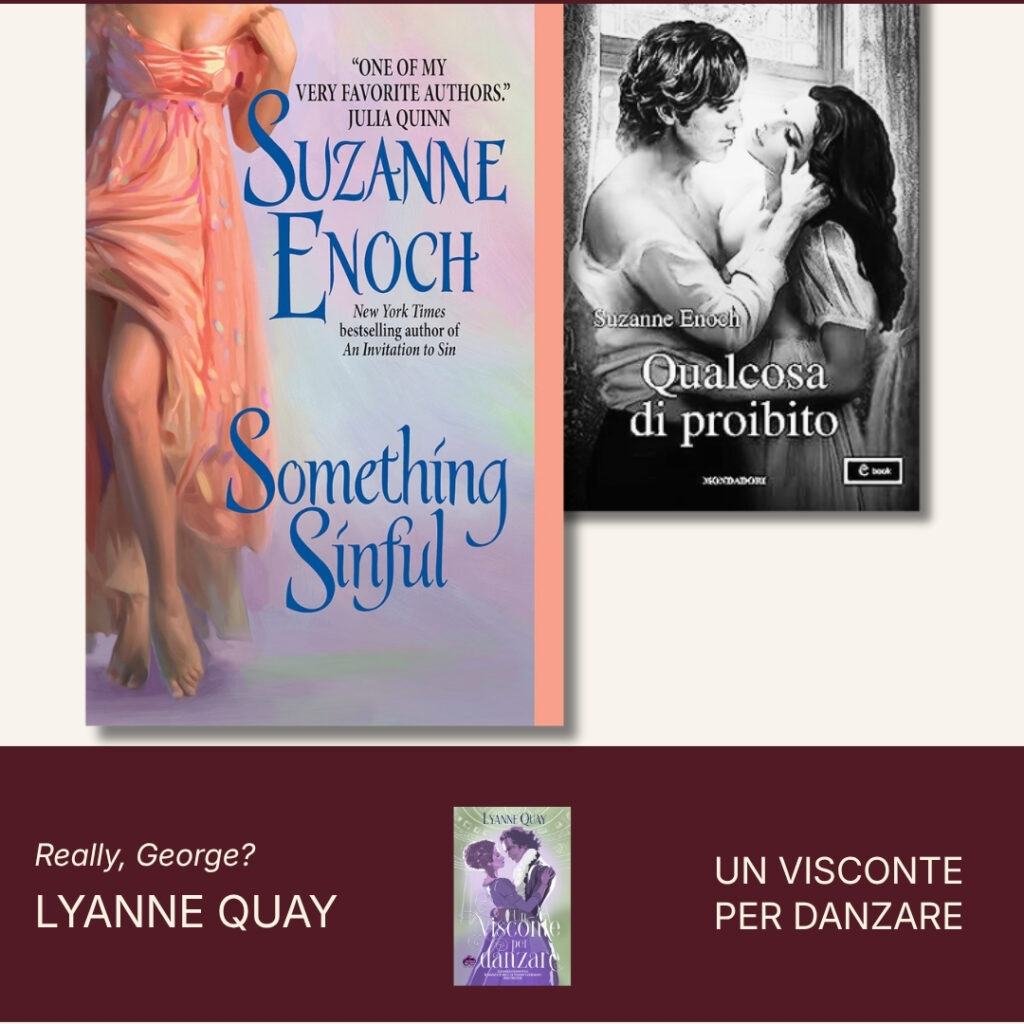
Ladies and gentlemen, His Lordship the Dog: Enoch’s Something Sinful is a missed chance.
I loved Sin and Sensibility, the first in the Griffin series. It made my Top Ten. This one horrified me. It really gets on your nerves. It starts with oversimplified prose and keeps going with a wildly predictable love story. The hero of the day sees her and, bam, kisses her for no reason. The book goes from kiss to kiss until a resolution built on some phantom “Chinese swordsmen.” All told, it’s a costume episode of Scooby-Doo, where Lord Dog slobbers all over his beloved’s face until he finishes her off in the finale.

A historical romance with a witty heroine
A historical romance with a witty heroine. It’s a shame, because for once we had a novel out to explore the charm of intelligence, in men and women alike, with a strong, sharp heroine. And despite the narrative disaster, all that brains gives us a real pearl, a safe harbor for all of us who read historical romance. Listen up, and I’m not being sarcastic: the heroine knows that “being ruined” is no worse than living in an unhappy marriage. At least for her, since she handles business brilliantly and would have no trouble supporting herself without a husband.
A period romance with a big, powerful family
A period romance with a big, powerful family. Besides the pearl, the book sits inside the great Griffin family. It gives us a chance to wonder why Tess Thompson, London’s Highlander books, Nora Roberts… all send their heroines to a happy landing in a big, supportive family, with lots of brothers and sisters and their spouses. These authors seem to offer their heroines extra protection at the finish line: no longer one rich husband looking after their wellbeing, but his whole clan. Above all, they give the happy ending a setting where the wife’s role can really show its power. Marriage is no longer the woman stepping out of the game, stuck with housekeeping and motherhood. It’s a social microcosm where the married woman can “brag on the couch” about being one, in front of younger women who are, of course, lying in wait.
A Regency romance with the family-clan myth
A Regency romance with the family-clan myth. Though I do catch in this aesthetic, and in this smugness, a leftover of an obsolete way of thinking. It seems to belong to historical and social outlooks long gone. Western society, barring some strong Latin pockets, is by now atomized. For the Anglo-Saxon authors above, this myth of the family clan can’t come from lived experience, since Anglo-Saxon societies are hyper-individualist. Maybe it’s nostalgia for the mythical era of big families. But you know what? I imagine a lot of competition in these extended families, and a huge effort by husbands and wives to hide their problems from everyone else: a layoff, a child’s health problem, trouble at school, all to be covered up so nobody looks bad… Am I wrong? Three stars.
Signori, Sua signoria il Cane: Qualcosa di proibito è un’occasione mancata per Enoch. Tanto mi era piaciuto Peccati e sentimenti il primo della serie Griffin. eletto a mio romanzo della Top Ten, tanto questo m’ha fatto orrore. Questo Qualcosa di Proibito della Enoch fa venire veramente i nervi, comincia con una prosa ipersemplificata e anche prosegue con una storia romantica iper scontata, con l’eroe di turno che la vede e, sbam, la bacia senza un perché. Il romanzo andrà avanti di bacio in bacio fino allo scioglimento basato su fantomatici “spadaccini cinesi”. Insomma il tutto si configura come un episodio in costume di Scooby Doo, dove lord Cane slinguazza l’innamorata in faccia fino a farle la festa nel finale.
Historical romance con una eroina intelligente
È un peccato perché, per una volta, avevamo un romanzo dedicato a esplorare il fascino dell’intelligenza, sia per l’uomo che per la donna, e avevamo una protagonista forte e sagace. Il portato di tutto questo acume, malgrado il disastro narrativo, ci regala tuttavia una vera perla, un approdo per tutte noi che leggiamo romance storici: la protagonista, udite udite, – e non sono sarcastica, – è consapevole che “l’essere rovinata” non è una situazione peggiore rispetto a vivere in un matrimonio infelice, quanto meno per lei che è in grado di cavarsela egregiamente negli affari e non avrebbe problemi a mantener se stessa senza un marito.
Un romanzo rosa storico con il fascino della grande famiglia potente
Oltre alla perla, questo romanzo contestualizzato all’interno della grande famiglia dei Griffin,ci ci regala anche un’occasione per riflettere sul perché Tess Thompson, la London degli Highlander, Nora Roberts… indichino alle loro eroine il felice approdo in una grande famiglia solidale, con tanti fratelli e sorelle e relativi coniugi. Queste autrici sembrano offrire alle loro eroine un traguardo di protezione rafforzata: non più un solo marito ricco a tutelare il loro benessere, ma tutto il suo clan, e sopratutto offrono al lieto fine un contesto in cui possa dispiegarsi il potere del ruolo di moglie. Non più dunque il matrimonio come porsi della donna fuori dai giochi, confinata nella gestione della casa e nella maternità, bensì microcosmo sociale dove la maritata possa “vantarsi sul divano” di essere tale, al cospetto delle più più giovani donne e pertanto in agguato.
Un Regency con il mito del clan familiare
Colgo tuttavia in questa estetica e compiacimento il retaggio di un modo di pensare obsoleto, m pare appartenere a prospettive storiche e sociali ormai liquidate per sempre. La società occidentale – salvo particolarmente forti componenti latine – è ormai atomizzata. Nelle autrici anglosassoni menzionate questo mito del clan familiare non può essere legato a esperienze di vita vissuta, datosi che le società anglosassoni sono iper-individualiste. Forse è si tratta del rimpianto dell’era mitica delle grandi famiglia. Ma sapete cosa? Immagino in questi contesti familiari allargati una grande competitività e un enorme sforzo di mariti e mogli per nascondere i problemi agli occhi degli altri, un licenziamento, un problema di salute dei figli, o difficoltà scolastiche, tutto da dissimulare per non sfigurare… mi sbaglio? Tre stelle.