Heartbeat
Ashley Andrews
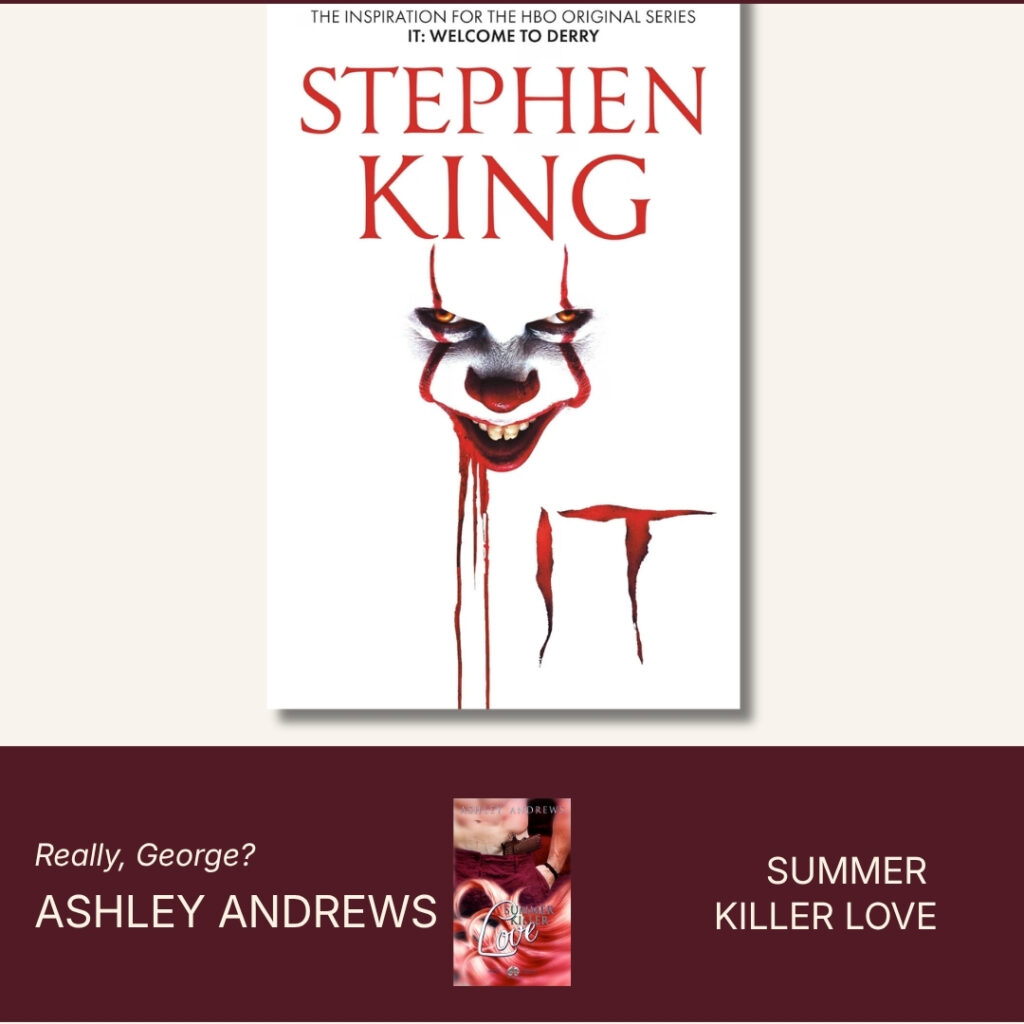
It by King : outrageously overrated
Stephen King’s It undoubtedly deserves a review – for its interminable length, and then for just how bad it is. When there’s no horror, there’s pain. For masochists.

The plot of King’s It in a nutshell
Something surfaces in the memories of six characters – something unsettling, set off by a simple phone call. The secret comes out little by little and shows up as a killer clown, the foul spirit of an indifferent society. On the level of metaphor the plot dissolves into a grind of exhausting digressions about characters who are barely even supporting players.
The main flaw of It is that it’s too long.
In his advice to budding novelists, King tells them – and not by chance – to work with very simple plots. In It, as it happens, very little actually happens; the story is studded with flashbacks and summaries that nibble at the edges of the tale. That alone is lethal for me as a reader. I like plots with a tangle in them.
In the general boredom I was cold-blooded enough to notice more than a few wrong notes in the dialogue, and some jaw-dropping infodumps in the big scene – the one where the protagonists finally meet again in a Chinese restaurant.
Richie, aged 11, turns to his friends and – without the famous-people voices he usually does – says: ‘It always warms my heart to see an old hag like that who adores children.’
Now a sentence like that, in vocabulary, structure and view of life, cannot come out of an 11-year-old boy. Classic register error.
As for the infodump, the scene at Jade of the Orient tells us things about the characters we already know perfectly well, supposedly to give us Bill the protagonist’s point of view, but with a heap of details already said and already obvious – which only makes sense if the book was bolted back together after the fact. In other words: the Jade of the Orient scene was written as if it belonged at the start of the novel, not in the middle.
But It was only the twelfth novel of the more than 50 King has written, not to mention the short stories. Probably a fall from keeping a 900-page thing under control, as we said.
To appreciate King’s It, you need to be a fan of the macabre and a reader of the emotional register.
The fault is mine more than old Stephen’s. The pages of sharp teeth and dripping slime I skip outright. Those pages, though, are the emotional content King’s readers read King for. Take away that escapist stuff – which for me is not escapist at all – and what you have left is the rest: a 900-page tease of ‘I’ll give it to you, I won’t’ (the horror scene).
Who would I recommend it to? Well, even within a shared taste for the macabre, King’s reader wants the emotional register of the telling: a heartbeat reader, not a lover of brainy mysteries, and not of hardboiled fiction that lives on sensation alone.
Two stars.
“It” di King: clamorosamente sopravvalutato
Una recensione, It di Stephen King, la merita senza dubbio, a causa della sua lunghezza eterna e, secondo poi, per quanto è brutto. Quando non c’è orrore, c’è dolore. Per masochisti.
La trama di It di King in due parole
Qualcosa affiora nella memoria di sei personaggi, qualcosa di inquietante scatenato da una semplice telefonata. Il segreto si rivela a poco a poco e si manifesta nei panni di un clown assassino, lo spirito immondo di una società indifferente. La trama si risolve sul piano della metafora in una sequela di digressioni estenuanti su personaggi meno che comprimari.
Il principale difetto di It è che è troppo lungo.
Nei suoi consigli ai romanzieri in erba, King suggerisce non a caso di lavorare su trame molto semplici. In It, effettivamente, gli eventi della storia sono pochi e costellati di feedback e sommari che attingono ai contorni della vicenda narrata. Già questo per me lettrice è letale. A me piacciono gli intrecci.
Nella noia generale, ho avuto la freddezza per notare non pochi registri sbagliati nei dialoghi e degli infodump disarmanti nella scena clou, quella in cui finalmente i protagonisti si rincontrano in un ristorante cinese.
Richie, 11 anni, si rivolge agli amici e – senza ripetere battute di personaggi famosi come quando fa le voci – dice: «Mi scalda sempre il cuore vedere una vecchia megera come quella che adora i bambini».
Ora una frase come questa, per lessico, struttura e view of life, non può essere pronunciata da un bambino di 11 anni. Errore tipico di registro.
Quanto all’infodump, l’incontro alla Giada d’Oriente ridescrive dei personaggi cose che sappiamo già benissimo, apparentemente per mostrare il point of view di Bill, il protagonista, ma con una profusione di dettagli già detti e scontati che solo si spiega con un rimontaggio del romanzo a lavoro finito. Ovvero: la scena alla Giada d’Oriente è stata scritta come per trovarsi all’inizio del romanzo e non in mezzo.
Ma It è stato solamente il dodicesimo romanzo degli oltre 50 scritti da King, per non menzionare i racconti. Probabilmente si tratta di una caduta dovuta anche alla difficoltà di tenere sotto controllo un testo lungo come dicevamo, sulle 900 pagine.
Per apprezzare It di King ci vuole un estimatore del macabro e un lettore di registro emotivo.
La colpa è sicuramente mia più che del vecchio Stephen. Le pagine tutte denti aguzzi e bave colanti io le salto a piè pari. Esse invece sono il contenuto emotivo per il quale il lettore di King legge King. Levato questo contenuto d’evasione – che per me d’evasione non è – non rimane che il resto: una manfrina di «te la do non te la do» (la scena horror) lunga 900 pagine.
A chi consigliarlo? Intanto direi che, pur nella comune fascinazione per il macabro, il lettore di King ha una preferenza per il registro emotivo della narrazione, è un lettore heartbeat, non un amante di mystery cervellotici e nemmeno di hardboiled tutti incentrati sulle sensazioni.
Due stelle.