Brio
 Thrill
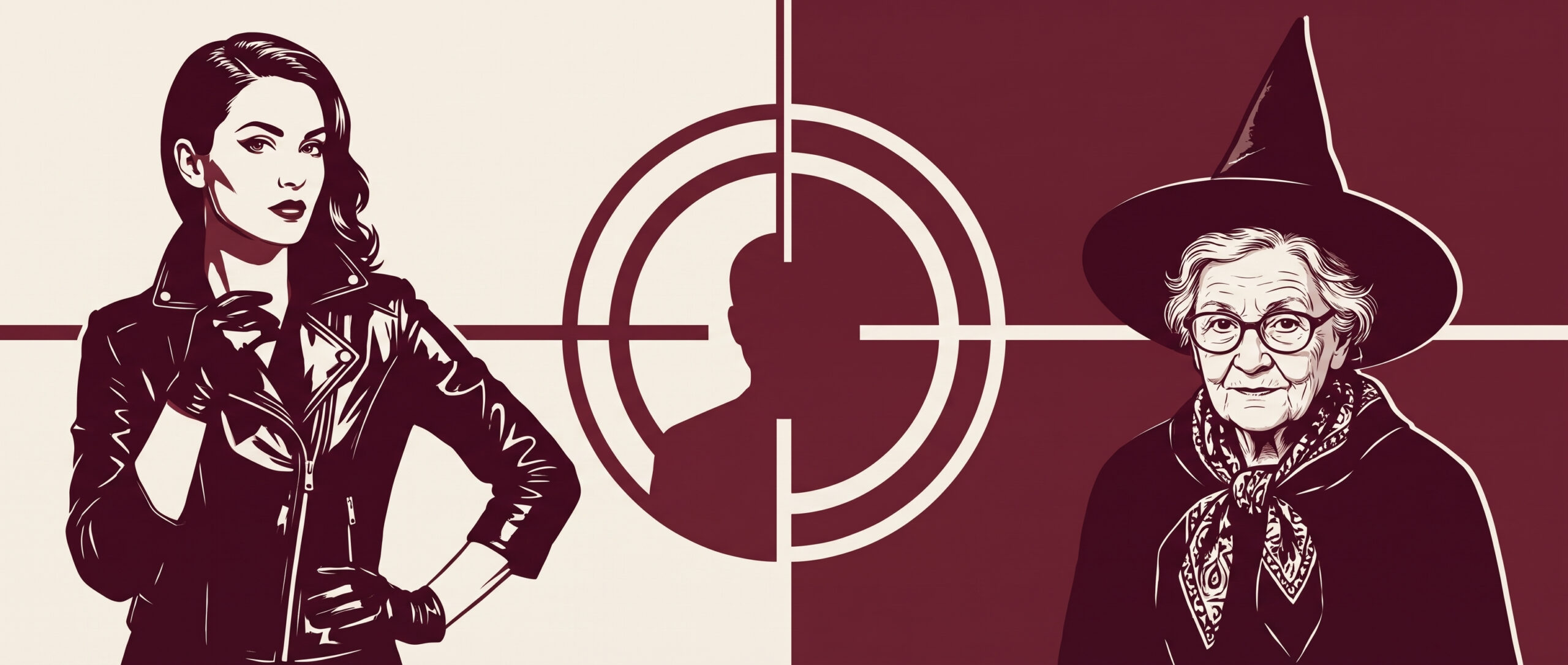
Years ago, American publishers must have warned their bestseller makers: watch out, most thriller readers are senior women. So a competition broke out over a target crime writers never saw coming: the witch, the babushka, the wicked stepmother. In practice, the most masculine of writers had to write for a kind of person who is the nightmare of the boy inside them. And they, the crime boys, defended themselves as best they could: they transfigured the babushka, from BILF to MILF. From old biddy to cougar.

The transfiguration of the babushka
In the new releases of a Lee Child, a Jo Nesbø, a Brian Freeman, suddenly irresistible fifty-somethings with “strong legs” were blooming everywhere. From Child’s Personal, to Nesbø’s The Thirst, to Freeman’s Season of Fear.
The captatio benevolentiae of “strong legs”
At the phrase “strong legs,” Hillary Clinton’s calves come to mind, but for the shrewd writers it was meant as a captatio benevolentiae aimed at the lady reader. And their heroes were basically saying things like: “Come here, irresistible woman with strong legs.” Meh.
And off it went, everybody getting hooked on aging, heavyset, dumpy ladies.
The aging, heavyset reader reacts
As an aging, heavyset woman, I can say it: I don’t like this sorry little song meant to butter up auntie.
And since the aging, heavyset woman takes revenge (age already doesn’t put you in a good mood, and if you overdo the food, it’s a sure sign of latent aggression), we rap the mystery boys on the knuckles, no mercy.
How to really write for senior readers
Boys, call Phoenix, Arizona, and ask Aunt Meyer, the author of Twilight. She’ll explain that to catch the crazy old lady, you must not make the detective fall for a plain woman. You must have him bewitched by a female character who is credible for her age, and then, with a highly fantasy effort, have him fascinated by the lady’s psychological and moral qualities, with no remarks on her size, her elegance, her figure, her skin. Nothing.
We seasoned readers don’t want to know what the lady who captivates the protagonist looks like. We want to know what she’s like psychologically, because fears and desires are ageless. To please the ladies, symmetrically, your charming detective must instead show off his unsettling physicality and his power to stir emotional reactions and physical sensations in the lady.
To write for women, you have to give the detective a body and the ladies a soul.
The right example, and the opposite
Like this: Fay’s eyes went wide with such irresistible trepidation that John stretched out his forearm to grab the Glock in the glove compartment, so close to her that she couldn’t help noticing, with a shiver, the thick, bulging tendons.
Basically the opposite of what happens in thrillers.
The widower detective alternative
In short, rather than bringing in politically correct charm, give us the inconsolable widower detective. We can even put up with him falling for the vamp criminal (what a horrible cliché). But please, no femme fatale grandmas. Thanks again.
Lee Child evolves
A lot has changed since I wrote these notes. In his hugely successful The Midnight Line, Lee Child does exactly what I asked of him, and he does it with a narrative double somersault that lets him keep his appeal with male readers: he splits the female lead in two, one beautiful and the other defined only in psychological terms (I can’t say more without spoiling it). And while Reacher’s psychology, his inner dialogue, remains the thread of the novel, Child is kind enough to describe the psychological impact that Reacher’s gigantic build, and his “fists as big as chickens,” has on the policewoman. A standing ovation, stadium wave and all, for a truly cunning, sexy metaphor. As if that weren’t enough, a sexier-than-ever Reacher breaks through the fantasy wall: for him, the eyes are enough. “I look at the eyes,” he says outright. Well done, Child. You must be a very sweet man, because you got us.
Anni fa gli editori americani devono aver avvisato i loro bestseller maker: attenzione, i lettori di thriller sono per la maggior parte donne senior. Si scatenò così la competizione su un target imprevisto per gli scrittori di crime: la strega, la babushka, la madre matrigna. In pratica i più maschili degli scrittori dovevano scrivere per un tipo di persona che è l’incubo del ragazzo in loro. E loro, i ragazzi del giallo, se ne difesero come potevano: trasfigurarono la Babushka, da Bilf a Milf. Da befana a cougar lady.
La trasfigurazione della Babushka
Nelle novità editoriali di un Lee Child, un Jo Nesbø, un Brian Freeman fu tutto un fiorire di cinquantenni irresistibili con «gambe forti». Si va dal Personal di Child, al Sete di Nesbø, al Io sono tornato di Freeman.
La captatio benevolentiae delle «gambe forti»
Alla dicitura «gambe forti» vengono in mente i polpacci della Clinton, ma per gli astuti scrittori doveva essere una captatio benevolentiae rivolta alla signora lettrice. E i loro protagonisti in pratica dicevano cose tipo: «Vieni qua, irresistibile donna dalle gambe forti». Bah.
E via che era tutto un farsi intrigare dalle signore attempate e appesantite, chiatte.
La reazione dell’attempata appesantita
Da attempata appesantita, io posso dirlo: a me questa canzone triste per lusingare la zia non piace.
E siccome l’attempata appesantita si vendica – già l’età non ben dispone, se poi si abbonda col cibo è segno sicuro di aggressività latente – bacchettiamo sulle dita senza pietà i mystery boys.
Come scrivere davvero per le lettrici senior
Ragazzi, fate una telefonata a Phoenix in Arizona, a zia Meyer, l’autrice di Twilight. Vi spiegherà che per agguantare la vecchia pazza non bisogna indurre il detective a innamorarsi di una bruttona: bisogna farlo stregare da una figura femminile credibile quanto a età e poi, però, con sforzo altamente fantasy, occorre farlo affascinare dalle qualità psicologiche e morali della signora, senza apprezzamenti sulla stazza, sull’eleganza, sul fisico, sulla pelle. Niente.
Noi lettrici di lungo corso non vogliamo sapere com’è esteticamente la signora che avvince il protagonista. Vogliamo sapere com’è psicologicamente, perché paure e desideri sono senza età. Per piacere alle signore, simmetricamente, il vostro affascinante detective si dovrà, invece, mostrare la propria fisicità conturbante e le capacità di suscitare reazioni emotive e sensazioni fisiche nella signora.
Per scrivere per le donne bisogna dare un corpo all’investigatore e un’anima alle signore.
L’esempio corretto e il contrario
Così: Fay sgranò gli occhi con tale irresistibile trepidazione che John tese l’avanbraccio per afferrare la Glock nel cruscotto, tanto vicino a lei da darle modo di notare, in un brivido, i tendini grossi e in rilievo.
In pratica il contrario di ciò che accade nei thriller.
L’alternativa dell’investigatore vedovo
Insomma, piuttosto che introdurre il fascino politically correct, meglio l’investigatore vedovo inconsolabile. Possiamo persino sopportare che si innamori della criminale vamp (che cliché orribile); per favore, le nonne fatali no. Grazie ancora.
L’evoluzione di Lee Child
Da quando scrissi queste note, molto è cambiato. Lee Child nel suo riuscitissimo Inarrestabile (The Midnight Line) fa esattamente ciò che gli chiedevo e lo fa con un doppio carpiato narrativo che gli consente di non perdere appeal presso i lettori maschi: sdoppia la protagonista femminile, una bella e l’altra definita solamente in termini psicologici (non posso dire di più per non spoilerare). E se la psicologia di Reacher, il suo dialogo interiore, resta il filo conduttore del romanzo, Child ha la bontà di descrivere l’impatto psicologico sulla poliziotta della stazza gigantesca di Reacher e dei suoi «pugni grandi come polli». Applauso con la ola per una metafora davvero astutamente sexy. Come se non bastasse, un Reacher più sexy che mai sfonda il muro del fantasy: a lui bastano gli occhi. «Io guardo gli occhi», dice esplicitamente. Bravo, Child. Devi essere un uomo molto dolce, perché ci hai capite.