Brio
 Thrill
Ashley Andrews
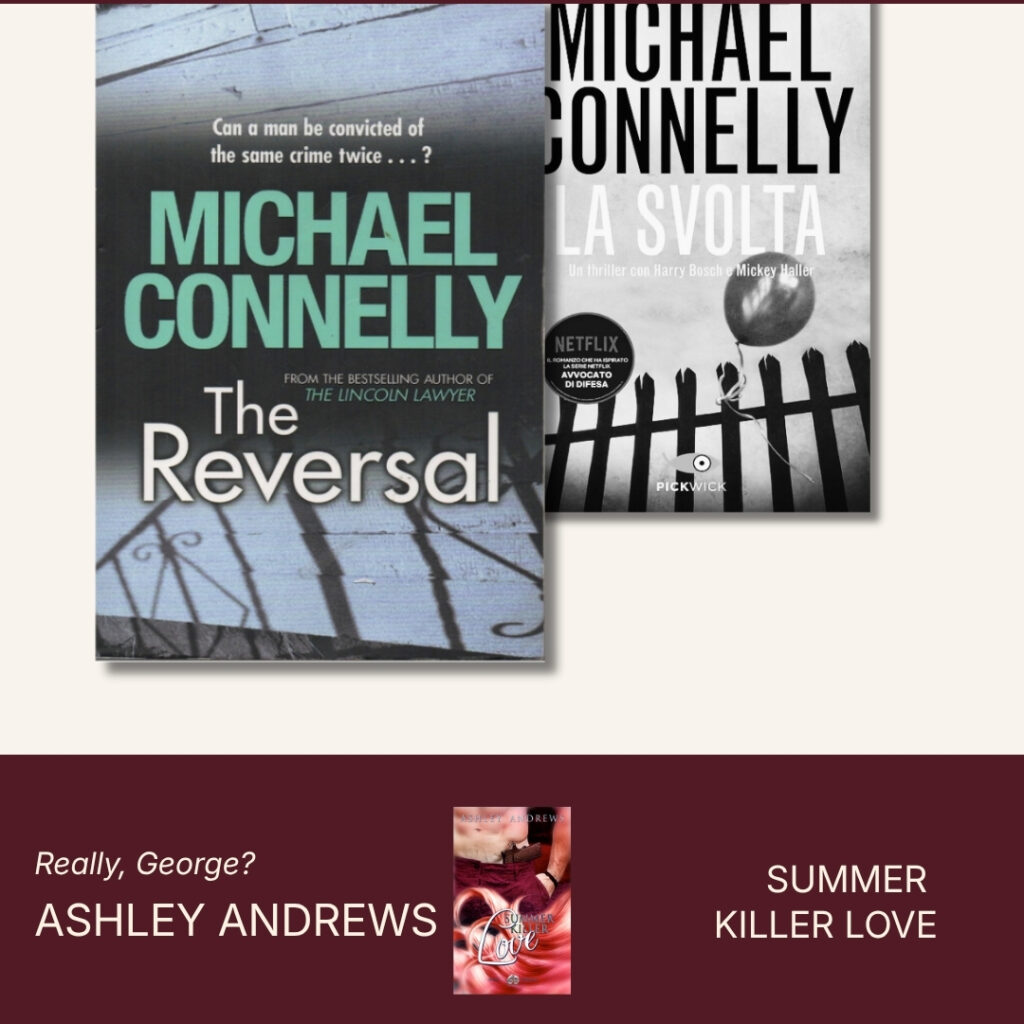
An old case pushes Haller from defence to prosecution, working alongside Harry Bosch and Haller’s own ex-wife.

“Keep things moving” — that’s the advice Haller gives himself throughout the novel, and Connelly seems to be repeating it to himself too, maybe aware that a courtroom book isn’t easy to keep tense.
Well, he pulls it off. And he gets deeper into trial strategy than Grisham does, I have to say. You actually get how the moves are played in an American trial. So the book’s packed with information, too.
Pairing Haller with Bosch on the same case makes you lose the blues that usually colour the Bosch novels — one of the best Harrys of the last quarter century. The open ending hints at a sequel.
So really, this tactical move looks like a genuine reversal for the Connelly brand, freeing it from the Harry Bosch character. But we readers won’t allow it.
Un vecchio caso porta Haller a passare dalla difesa alla parte dell’accusa e a lavorare con Harry Bosch e l’ex moglie.
“Tenere le cose in movimento”: è questa la raccomandazione che Haller fa a se stesso per tutto il romanzo, e Connelly sembra ripeterselo, forse consapevole che un libro su un processo non è facile da rendere tensivo.
Beh, ci riesce, e in più entra nel merito delle strategie processuali meglio di un Grisham, devo dire. Si capisce come ordire le varie mosse in un processo americano. Contenuto informativo, dunque ricco.
L’idea di affiancare Haller e Bosch in una medesima indagine ci fa smarrire il blues che connota i romanzi con protagonista Bosch, uno degli Harry più riusciti del quarto di secolo. Il finale aperto fa subodorare il sequel.
Insomma, l’operazione tattica prefigura davvero una svolta nella gestione del marchio Connelly per emanciparlo dal personaggio di Harry Bosch, ma noi lettori non lo permetteremo.